

Centralized vs. Federated SOCs: How APAC HQs in Singapore Are Balancing Regional Compliance and Response Speed
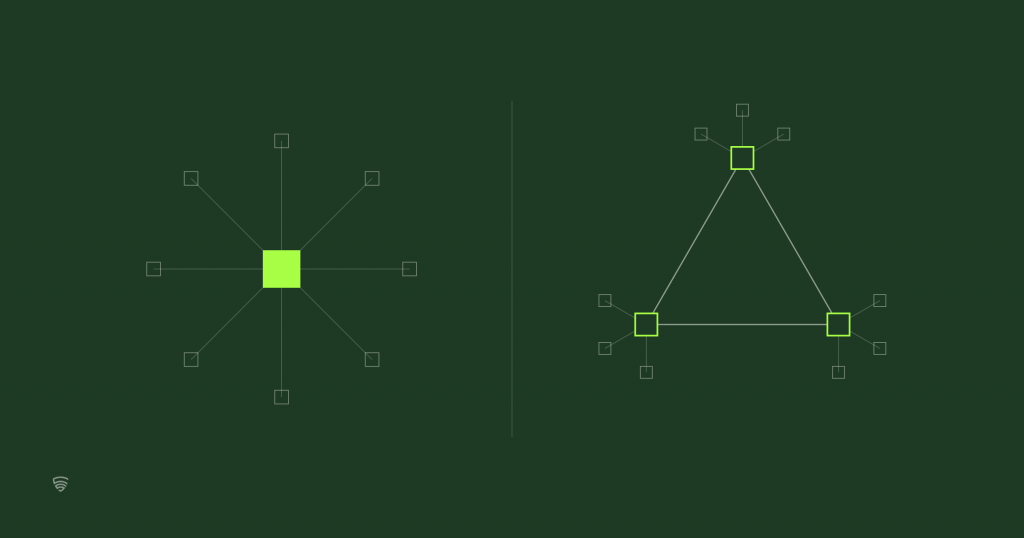
APAC headquarters in Singapore choose between a centralized SOC, which gives one team unified visibility and consistent playbooks, and a federated SOC, which keeps detection and data close to each market for residency and speed. Most large firms combine both in a hub-and-spoke model, letting Singapore govern while regional cells meet local MAS, PDPA, and CSA timelines.
Table of Contents
What Centralized And Federated SOC Models Mean For APAC Operations
A Security Operations Center is the team, tooling, and process that monitors an organization for threats and coordinates the response. When a company operates across several APAC markets from a Singapore headquarters, the question becomes where that capability physically and organizationally sits.
The two ends of the spectrum work as follows:
- A centralized SOC runs one team, one detection stack, and a single set of playbooks for the whole region. Telemetry from every market flows to one location for analysis and response.
- A federated SOC runs several regional teams that operate with a degree of autonomy. Each market keeps its own detection, its own analysts, and often its own copy of the data, usually under a central function that sets standards and coordinates.
Between these two sits the hub-and-spoke model, where a central hub in Singapore owns governance, tooling standards, and threat intelligence, and regional spokes handle local detection and first response. Most APAC headquarters land somewhere on this middle ground, and the section on the hub-and-spoke model explains why.
Why Singapore Anchors So Many APAC SOC And Security Operations Hubs
Singapore concentrates a large share of regional security operations for reasons that are structural rather than incidental. Companies place their APAC SOC hub in Singapore because the city offers a dense base of security talent, strong network connectivity to the rest of the region, and a regulatory environment that publishes clear expectations for financial services and critical infrastructure.
That regulatory clarity works in two directions. It makes Singapore an attractive place to base a regional team, and it also imposes some of the region’s tightest response clocks, which the next two sections examine in turn. The Monetary Authority of Singapore (MAS), the Cyber Security Agency of Singapore (CSA), and the Personal Data Protection Commission (PDPC) each set obligations that a regional SOC has to meet from day one.
One point shapes everything downstream, so it is worth stating early. Singapore’s technology risk expectations arrive in two forms. The MAS Technology Risk Management Guidelines set principles and are enforced in practice, while the binding legal obligations live in MAS Notices and, as of 10 May 2024, in requirements migrated into the Financial Services and Markets Act. The MAS Notices on Cyber Hygiene set a mandatory baseline of security controls that sits alongside the Guidelines, issued as Notice FSM-N06 for banks and as equivalent notices for other institution types. A SOC design has to satisfy the binding items first, then the wider guidance.
Recommended read: What MAS Auditors Look for in Your Identity and Access Architecture
The Compliance Forces That Pull a Singapore SOC Toward Federation
Several compliance pressures push an APAC operation to keep detection and data close to each market rather than pooling everything in Singapore. Data residency and cross border transfer rules sit at the center of this pull.
The main forces toward a federated SOC design are these:
Cross border data transfer limits:
Under the PDPA, personal data that leaves Singapore has to receive a comparable standard of protection abroad, an obligation known as the Transfer Limitation Obligation. Routing security telemetry that contains personal data into a central platform in another country becomes a controlled activity, not a default one.
In country data localization across APAC:
Several markets a Singapore HQ oversees, including China, Indonesia, Vietnam, and India, apply their own localization or transfer conditions to certain categories of data. Where logs and case data include regulated content, keeping analysis in-region reduces transfer exposure. Confirm the specific rule for each market with local counsel, because scope and thresholds differ.
Local incident notification duties:
Each regulator expects notification from an entity operating in its jurisdiction, on its clock. Regional analysts who understand the local rule set and language often close that gap faster than a distant central team.
Sector specific supervision:
A regulated financial entity in one market answers to that market’s supervisor. Local response capability makes it easier to produce the evidence and reporting each supervisor expects.
The common thread is that regulation frequently attaches to the location of the data and the entity, which favors keeping some detection and analysis in-market.
The Response Speed Forces That Pull a Singapore SOC Toward Centralization
Several operational and speed pressures favor pooling capability in one Singapore SOC. Response speed here means the time from a signal firing to a coordinated, evidenced action, including regulatory notification.
The main forces toward a centralized SOC design are these:
- Unified visibility: One correlation platform sees an attack that touches three markets as a single campaign. Fragmented regional views can miss the connection, or see it late.
- Consistent playbooks and severity criteria: A single set of runbooks means the same class of incident triggers the same escalation everywhere, which matters when a clock as short as 1 hour or 2 hours is running.
- Follow-the-sun coverage: A central team spanning shifts can maintain 24-hour eyes without every market staffing a full night rotation.
- Tooling and threat-intelligence economics: One well-tuned detection stack and one intelligence feed are cheaper to run and easier to keep current than several parallel ones.
- Scarce senior talent: Concentrating experienced analysts in one hub raises the quality of triage on the incidents that matter most.
These two sets of forces work against each other. Compliance tends to keep detection and data in the markets, and speed and consistency tend to concentrate coordination in Singapore. The models compared below show how APAC headquarters balance the two.
Centralized vs. Federated SOC: A Side-by-side Comparison for APAC HQs
The table below compares the two models and the hub-and-spoke middle ground across the dimensions that a Singapore headquarters weighs most heavily. Treat it as a set of trade-offs; the right answer depends on your regulatory exposure and the markets in scope.
| Dimension | Centralized SOC | Federated SOC | Hub-and-spoke (hybrid) |
| Cross-region visibility | High, single pane | Lower, requires stitching | High at the hub, fed by spokes |
| Playbook consistency | High | Variable by region | Standard set by hub, applied locally |
| Data residency alignment | Harder, telemetry crosses borders | Strong, data stays in-market | Strong, sensitive data stays local |
| Local response speed | Depends on distance and timezone | Fast, analysts in-market | Fast locally, coordinated centrally |
| Timezone coverage | Follow-the-sun from one hub | Native to each region | Hub covers gaps, spokes cover local hours |
| Tooling and intel cost | Efficient, one stack | Higher, parallel stacks | Shared platform, local sensors |
| Coordination overhead | Low internally | High across regions | Moderate, governed by the hub |
| Senior talent use | Concentrated | Diluted across sites | Concentrated at hub, guided spokes |
Because each column favors a different model, most APAC headquarters build a hybrid rather than commit to a pure design.
The Hub-and-spoke SOC Model Most Singapore Headquarters Settle On
Most APAC headquarters resolve the trade-off by building a hub-and-spoke SOC. Singapore operates as the hub that owns detection engineering standards, threat intelligence, severity definitions, and regional reporting, while each market runs a spoke that performs local monitoring and first response inside its own data boundary.
A working hub-and-spoke SOC typically assigns responsibilities like this:
- The Singapore hub sets one severity taxonomy, one escalation ladder, and one core set of playbooks, then maintains the shared detection content and intelligence.
- Regional spokes run local sensors and triage, keeping personal data and regulated telemetry in-market where transfer rules apply.
- Notification ownership is defined in advance for each regulator, so the entity that has to notify MAS, CSA, or a regional supervisor is identified before an incident, not during one.
- The hub aggregates sanitized, non-personal signal for cross-region correlation, which preserves single-campaign visibility without moving regulated data unnecessarily.
This design keeps the response clocks in the section below achievable, because local teams detect and escalate while the hub keeps the picture consistent across markets.
Mapping Singapore and APAC Compliance Requirements to SOC Design
The following evidence map connects the specific Singapore obligations to the SOC design choice each one drives. It is written for financial services and critical-infrastructure operators, which face the tightest clocks. Confirm applicability to your own entities with counsel, because designation and scope determine which rows apply.
| Requirement | Regulator and instrument | Clock and start point | SOC design implication |
| Notify a relevant or material technology and cyber incident | MAS, Technology Risk Management requirements now under the Financial Services and Markets Act (effective 10 May 2024) | Within 1 hour of discovery | Escalation and on-call authority must reach MAS inside 1 hour; local detection and a pre-drafted notification path close the gap |
| Recover critical systems | MAS, TRM requirements | Recovery time objective of not more than 4 hours | Tested recovery runbooks and central coordination of disaster recovery |
| Submit root cause analysis | MAS, TRM requirements | Within 14 days of discovery | Forensics and evidence-preservation workflow feeding a structured report |
| Report a cybersecurity incident affecting CII | CSA, Cybersecurity Act 2018 as amended in 2024, provisions in force 31 October 2025 | Within 2 hours of becoming aware | A dedicated 2-hour runbook; scope now includes suspected APT activity, supply-chain incidents, and third-party or overseas-hosted CII |
| Submit supplementary and final CII reports | CSA, Cybersecurity Act | Supplementary within 72 hours; final within 30 days after supplementary details | Sustained evidence capture beyond the first alert |
| Notify a notifiable personal data breach | PDPC, PDPA Part VIA | To PDPC as soon as practicable, no later than 3 calendar days after completing the assessment that a breach is notifiable; to affected individuals as soon as practicable | Assessment capability close to the data; the clock starts at assessment completion, so fast, documented assessment is the control that matters |
| Meet the notifiable-breach thresholds | PDPC, PDPA Part VIA | Significant harm to individuals, or 500 or more individuals affected | Case management that can size an incident quickly against both thresholds |
| Keep personal data protected across borders | PDPC, Transfer Limitation Obligation | Ongoing | Telemetry routing designed so that regulated data receives comparable protection abroad, which often argues for local processing |
The 2024 amendment to the Cybersecurity Act also lets CSA designate systems of temporary cybersecurity concern and regulate third-party or overseas-hosted CII whose owner sits in Singapore, which widens the set of systems a regional SOC may have to cover. On the MAS side, financial institutions submit the incident reporting template through the MAS-FI Transactions Platform from 1 February 2026, so the notification workflow should target that channel.
The First Hours of a Regulated Incident: a Singapore Notification Timeline
Because the clocks above have different triggers and different start points, it helps to see them on one timeline for a Singapore entity that is both MAS-regulated and a CII owner and holds personal data. The timeline assumes the worst case where all three regimes apply, so read each row against your own designations.
| Elapsed time | What happens | Which clock |
| T plus 0 | Signal fires, analyst triages, incident is declared and assessment begins | Internal detection and response |
| Within 1 hour of discovery | MAS notified if the incident is a relevant or material technology or cyber incident | MAS |
| Within 2 hours of awareness | CSA notified if the incident affects designated Critical Information Infrastructure | CSA |
| Within 72 hours | Supplementary CII incident report submitted to CSA | CSA |
| As soon as assessment completes, no later than 3 calendar days after | PDPC notified if the breach is notifiable, and affected individuals notified if significant harm is likely | PDPC |
| Within 14 days of discovery | Root cause analysis report submitted to MAS | MAS |
| Within 30 days after supplementary details | Final CII incident report submitted to CSA | CSA |
Two points decide whether a team meets these windows. The MAS and CSA clocks start at discovery or awareness, so the bottleneck is escalation authority, not investigation. The PDPC clock starts at assessment completion, so a fast and well-documented assessment is what keeps the 3-day window comfortable. A SOC design that puts detection and decision-making close to each market is often what makes the 1-hour and 2-hour windows realistic.
Validating SOC Detection and Response with Penetration Testing
Selecting a SOC model settles the architecture. Confirming that the architecture detects and escalates inside these windows takes controlled testing. Penetration testing, red team exercises, and purple team engagements generate the signals a SOC is supposed to catch, then measure whether detection fired, whether escalation reached the right owner, and whether the response path met the clock.
This kind of validation supports a SOC program rather than replacing any part of it. A regional team can run a mature stack and still benefit from independent confirmation that a simulated intrusion in a specific market produced a MAS-ready or CSA-ready escalation inside the required time. Testing the internet-facing surface each market exposes through is often where that confirmation starts. Boards and supervisors tend to ask for proof that the SOC was tested and responded as designed, backed by evidence they can examine.
The quality of that evidence depends on how the testing is run. Authenticated, human-led testing with named-researcher accountability produces findings that another engineer can reproduce and verify, and how you split the work between manual and automated penetration testing shapes how much of that reproducibility you get. For teams preparing for an audit at the same time, this evidence overlaps closely with what our guide to SOC 2 penetration testing and what to expect before an audit describes. Singapore also operates a licensing regime that covers both penetration testing and managed SOC monitoring providers under the Cybersecurity Act, so provider licensing is worth confirming during selection.
Cost Drivers for a Centralized, Federated, or Hybrid SOC
Cost rarely decides the model on its own, but it shapes how far a team can push toward one end of the spectrum. The drivers below explain where spend concentrates in each design, without attaching figures, because every estimate depends on scope.
The factors that move SOC cost most are these:
- Number of markets and entities in scope, which sets how many spokes a federated or hybrid model has to staff and tool.
- Detection stack footprint, since parallel regional stacks cost more to license and tune than one shared platform.
- Analyst coverage model, because native round-the-clock staffing in every market is more expensive than follow-the-sun from a hub.
- Data residency architecture, where keeping regulated telemetry in-market can require additional in-region storage and processing.
- Threat intelligence and content engineering, which is cheaper to maintain once centrally than to duplicate.
- Validation cadence, meaning how often penetration testing and red or purple team exercises confirm the design still holds.
Because these drivers combine differently for every organization, the cost of standing up and running an APAC SOC, and of the testing that validates it is scoped per engagement.
Decision checklist
A decision checklist for choosing your APAC SOC model
Work from your regulatory exposure toward a model, rather than starting from a preferred architecture and forcing compliance to fit. Answer each item for your own entities and markets before you commit to a design.
You have worked through every decision. You now have a model grounded in your obligations, and a validation plan that proves it. The remaining step is independent confirmation of that validation.
Working through this list gives you a model grounded in your obligations, and a validation plan that proves the model works. If you want independent confirmation of the validation step, a human-led penetration testing engagement can cover the markets and windows that matter most to you, scoped to your entities.
Scope a penetration testFrequently Asked Questions (FAQs) About Centralized and Federated SOCs in Singapore
The questions below cover the points APAC security leaders raise most often when weighing these models.
- What is the difference between a centralized and a federated SOC?
A centralized SOC runs a single team and detection stack with shared playbooks for the whole region, with telemetry flowing to one location. A federated SOC runs several regional teams with local detection and often local data, coordinated by a central function. Many organizations combine the two in a hub-and-spoke model.
- Why do so many APAC companies base their SOC in Singapore?
Singapore offers a deep pool of security talent, strong regional connectivity, and regulators that publish clear expectations for financial services and critical infrastructure. Those same regulators, MAS, CSA, and the PDPC, also set some of the region’s tightest response clocks, which shapes how the SOC is built.
- How fast does a Singapore financial institution have to report a cyber incident?
A MAS-regulated financial institution has to notify MAS within 1 hour of discovering a relevant or material technology or cyber incident, and to recover critical systems within a 4-hour recovery time objective. A CII owner has to notify CSA within 2 hours of becoming aware of a reportable incident.
- When does a personal data breach have to be reported in Singapore?
Under the PDPA, an organization notifies the PDPC as soon as practicable, and no later than 3 calendar days after completing its assessment that a breach is notifiable. A breach is notifiable if it is likely to cause significant harm to individuals, or if it affects 500 or more individuals. Affected individuals are notified when significant harm is likely, and penalties for failing to comply can reach SGD 1 million, or 10% of annual turnover in Singapore, whichever is higher.
- Does a federated SOC help with data residency in APAC?
It can, because keeping detection and analysis in-market reduces how much regulated telemetry crosses borders. That matters under the PDPA Transfer Limitation Obligation and under localization rules in several APAC markets. A hub-and-spoke design keeps sensitive data local while still allowing cross-region correlation on sanitized signal.
- How do we prove our SOC meets these response times?
Controlled penetration testing, red team exercises, and purple team engagements generate the intrusions a SOC should catch, then measure whether detection fired and whether escalation met the required window. Authenticated, human-led testing with reproducible, named-researcher findings gives the kind of evidence a board or supervisor will accept.