

What Endpoint Detection and Response (EDR) Misses Against Malware-as-a-Service in Singapore?
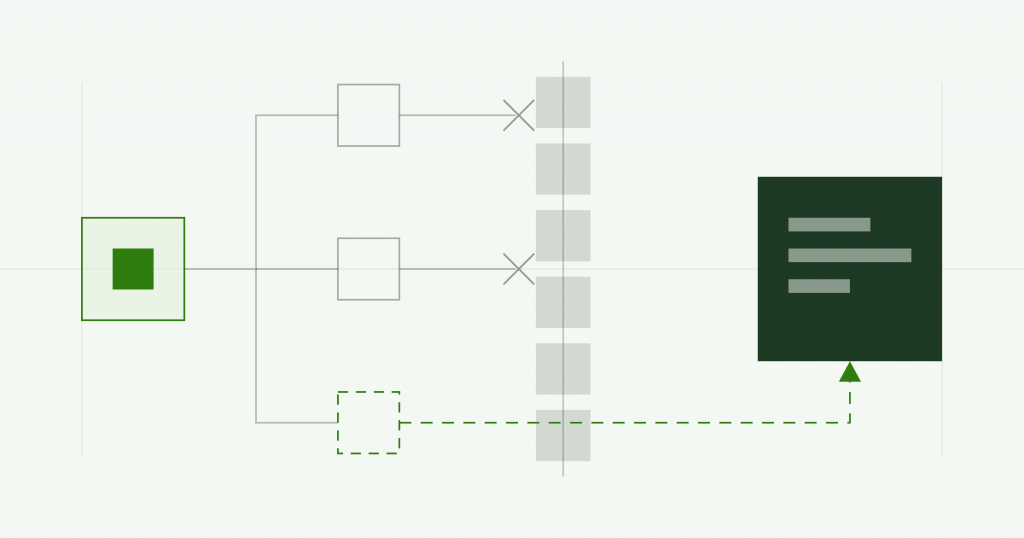
Singapore’s national cyber authority has named the driver behind a local rise in infections, and it is a commercial one. According to the Cyber Security Agency of Singapore’s Cyber Landscape 2025/2026 report, the notable rise in infected systems here was driven primarily by an expanded attack surface stemming from the growing adoption of Malware-as-a-Service operations. Attacking got easier to buy, so more people are doing it.
Most Singapore enterprises already run endpoint detection and response, and Endpoint Detection and Response (EDR) is a genuine improvement over the antivirus it replaced. So the uncomfortable question is the one this article answers: if defenses have improved, why are local infection numbers going the other way? Part of the answer is that Malware-as-a-Service is built, deliberately, to operate in the spaces endpoint detection watches least well, and part of it is that most organizations have never tested whether their own Endpoint Detection and Response (EDR) deployment would catch a realistic attack chain rather than a lab sample.
This article explains what Malware-as-a-Service is, where its attack chain slips past endpoint detection, why the gap matters more in Singapore’s current threat and regulatory environment, and how enterprises here establish whether their defenses actually hold. It closes on the practical part: validation and where it fits alongside the Endpoint Detection and Response (EDR) you already own.
Table of Contents
TL;DR
Malware-as-a-Service lets low-skill attackers rent credential-stealing and ransomware kits, and Singapore’s CSA identifies its growing adoption as a primary driver of the local rise in infected systems.
Endpoint Detection and Response (EDR) is a necessary baseline, and it is strong against known malware and suspicious process behavior on the devices it monitors. The dominant local attack chain is built to avoid exactly that: phished credentials, stolen session cookies reused from attacker infrastructure, and living-off-the-land movement, much of which happens off the endpoint where Endpoint Detection and Response (EDR) cannot see it.
MDR adds a staffed team watching the alerts around the clock, which helps. It improves your chance of catching an attack in progress and does not measure that chance. Only testing does.
Singapore raises the stakes twice over: the threat data already points here, and MAS TRM, the CSA Cyber Trust, and Cyber Essentials marks and PDPA enforcement increasingly expect tested, evidenced security rather than a control that is merely switched on.
Start here: ask when your Endpoint Detection and Response (EDR) was last tested against a realistic phishing-led intrusion, not a lab sample. If the answer is never, that is the gap this article is about.
What is Malware-as-a-Service?
Malware-as-a-Service is a commercial model in which criminal developers build malware and rent it to other criminals, who need little technical skill to run a campaign. The developer maintains the code, the infrastructure, and often a support desk and a dashboard; the customer, called an affiliate, points it at targets and shares the proceeds.
The consequence is the one the CSA report identifies. When running a credential-stealing or ransomware campaign no longer requires the ability to write malware, the number of people able to run one expands enormously, and so does the number of infections. The barrier that used to keep most would-be attackers out, technical capability, has been turned into a subscription.
Three product categories dominate what is on sale. Infostealers harvest saved passwords, browser session cookies, and cryptocurrency wallets, and they are the quiet front of this whole problem because a stolen valid credential does not look like an attack. Loaders and droppers establish a foothold and then pull down whatever the affiliate wants to run next. Ransomware-as-a-Service supplies the encryption payload, the negotiation portal, and the leak site as a packaged kit. A single intrusion often chains all three: a stealer sells access, a loader delivers, and ransomware collects.
Why is Malware-as-a-Service surging in Singapore?
Because Singapore combines a high concentration of valuable targets with the same commodity attack tooling now available worldwide, and the local data shows the result.
The CSA landscape report ties the rise in infected local systems directly to MaaS adoption alongside poorly secured consumer IoT devices. Independent threat reporting fills in the texture. ESET’s read of the Singapore market heading into 2026 found infostealers such as Formbook, Agent Tesla, and SnakeStealer among the most prevalent local threats and identified phishing and credential abuse as the primary pathways into corporate environments, with one phishing detection family alone accounting for close to a third of detected threats locally. Separately, threat-intelligence firm Cyfirma reported strong dark-web demand for Singapore-linked data and a ransomware focus on service industries and IT providers.
The pattern in that data matters for the rest of this article. The dominant local risk is scalable initial access: a phished credential, an infostealer, or a foothold that looks like a normal login. Endpoint detection was built primarily to catch malicious code running on a device, and that category of attack largely avoids running any, which is where the next two sections go.
What Does EDR Do Well, and Where Does It Stop?
Endpoint detection and response monitors the processes, files, and behaviors on a device, looks for patterns associated with malicious activity, and gives responders the telemetry to investigate and contain. Against the threats it was built for, it works, and no part of this article suggests running without it. EDR catches known malware families, flags suspicious process behavior such as a document spawning a shell, and shortens the time between compromise and response. For a modern enterprise it is a baseline control, not an optional one.
Its limits are structural rather than a matter of product quality, and they fall in three places. EDR watches the endpoint, so activity that happens off the endpoint is outside its view: a valid credential used to log into a cloud service from an attacker’s own machine generates no endpoint event on your estate at all. It reasons about behavior, so techniques designed to look like legitimate behavior give it little to alert on. And it protects the devices on which it is installed and is healthy, which quietly assumes complete coverage and correct configuration, an assumption that is often untrue in ways nobody has checked. None of these is a flaw to be patched. They are the shape of what endpoint monitoring is, and Malware-as-a-Service is built to live inside that shape.
Where the Malware-as-a-Service Chain Slips Past Endpoint Detection
Follow a representative MaaS intrusion from start to finish, and the gaps appear at specific, predictable stages.
Initial access through a person, not a payload. The chain usually opens with phishing that harvests a credential, which ESET’s local data identifies as the leading pathway into Singapore enterprises. A user typing their real password into a convincing fake page is not a malicious process on an endpoint. There is frequently nothing for Endpoint Detection and Response (EDR) to see, because at this stage nothing malicious has run on a monitored device.
Credential theft that produces no alert worth the name. Modern infostealers execute quickly, take saved credentials and active session cookies, and exit. Stolen session cookies are the sharp edge here: they let an attacker resume an already-authenticated session and walk straight past multi-factor authentication, because from the application’s point of view the session was already trusted. The theft is brief, and the reuse happens elsewhere.
Living off the land. Rather than dropping recognisable malware, MaaS operators increasingly use the legitimate tools already present on the system, the built-in scripting and administration utilities every Windows estate ships with. To endpoint detection, this reads as an administrator doing administrative things. Telling the real administrator from the intruder using the same tool is exactly the judgment that automated behavioral detection finds hardest.
Movement and action off the monitored estate. Once an attacker holds valid credentials, much of what follows can happen where your Endpoint Detection and Response (EDR) is not: logging into cloud consoles, SaaS platforms, and email from infrastructure you do not own and cannot instrument. The endpoint agent on a corporate laptop has no visibility into a session opened from an attacker’s server using a cookie stolen last week.
The through-line is that every one of these stages is engineered to resemble legitimate activity or to occur beyond the endpoint’s field of view. Endpoint Detection and Response (EDR) remains worth running; these stages are simply outside what endpoint monitoring can reach, which is why knowing whether your specific defenses would catch this chain requires testing it rather than assuming it.
One Intrusion, Start to Finish
The stages are easier to weigh as a single sequence. Here is a representative Malware-as-a-Service intrusion against a Singapore enterprise, of the kind the local threat reporting describes, with the endpoint’s view noted at each step.
A finance staff member receives an email that appears to come from a known supplier and follows a link to a login page that looks correct. They enter their Microsoft 365 credentials. Nothing malicious has run on their laptop, so the EDR agent has nothing to report. This is the initial access stage, and it happened entirely off the endpoint.
Minutes later, an infostealer rented from a Malware-as-a-Service operator runs briefly on the same machine, having arrived through a separate lure, and takes the browser’s saved passwords and, more valuably, the active session cookies for the applications the user is already logged into. It exits in seconds. A well-tuned Endpoint Detection and Response (EDR) may catch this step; a stealer designed to look like an ordinary process often gives it little to fire on, and the window is short.
The attacker now has a valid session cookie. From their own server, they load it and resume the user’s authenticated Microsoft 365 session directly, without a password and without triggering multi-factor authentication, because the application treats the session as one it already approved. This activity occurs on infrastructure the enterprise does not own and cannot instrument. The EDR on the corporate laptop sees nothing, because nothing is happening on the corporate laptop.
Inside the mailbox and connected services, the attacker reads, forwards, and stages data, then uses the access to reach further into cloud services. If the affiliate’s plan ends in ransomware, the encryption payload is delivered late, once the valuable access has already been used. By the time anything reaches a monitored endpoint in a form EDR reliably catches, the intrusion is well advanced.
At no single step was the endpoint agent defective. The chain simply spent most of its life in the two places endpoint detection cannot follow: inside a legitimate-looking human action and on infrastructure beyond the estate. That is the precise shape a validation exercise is built to expose before an attacker walks the same path unobserved.
Does Buying MDR Solve This?
It helps with one half of the problem and leaves the other half untouched, so the honest answer is that MDR is worth having and is still not the thing being asked for here.
The reasoning is worth following, because the market pushes hard toward MDR as the answer to EDR’s limits. Managed Detection and Response puts a staffed security operations team behind your endpoint tooling: analysts who watch the alerts around the clock, investigate the suspicious activities your EDR surfaces, and drive incident response when something real is found. For an organization without a 24-hour security team of its own, that is a genuine upgrade, because many of the gaps in the previous section are as much about nobody watching at 3am as about the technology itself. A living-off-the-land technique that generates a weak signal is more likely to be caught by an analyst reviewing behavior than by an unwatched dashboard.
What MDR does not do is tell you whether the combined system, your EDR plus the humans watching it, actually stops a modern intrusion. It improves your chance of catching an attack in progress; it does not measure that chance. You still do not know whether a realistic phishing-led chain would reach your data before anyone noticed, because the only way to know that is to run the chain and watch what happens. MDR is a stronger defense to test, not a substitute for testing it.
This is the distinction the rest of the article turns on. Detection tooling, whether you run it yourself or have it managed, answers, “Are we watching?” Validation answers, “Would the watching actually stop this?” Both matter, and only the second is measurable in advance of a real attack.
The three sit in different places, and it helps to see them side by side rather than as competitors.
| EDR | MDR | Validation testing | |
| What it is | Software that monitors endpoints for malicious behavior | EDR plus a staffed team watching and responding around the clock | An engagement that runs a realistic attack against your defenses |
| The question it answers | Is anything suspicious happening on our devices? | Is someone watching and responding when it does? | Would our defenses actually stop a real intrusion? |
| Runs | Continuously | Continuously | Point in time, repeated on a cadence |
| Main blind spot | Off-endpoint activity and look-legitimate techniques | Inherits the endpoint’s blind spots; adds human judgement over them | Not a control itself; measures the controls |
| What it leaves unanswered | Whether anyone acts on the alert | Whether the response actually works against a full chain | Nothing, for the scenario tested; a new scenario needs a new test |
| Relationship | The floor | The floor, staffed | The measurement of whether the floor holds |
Read across the bottom row. EDR and MDR are defenses; validation is how you find out whether those defenses do what you are paying them to do. An enterprise running managed EDR and never testing it is in the common position of having bought protection it has never seen work.
Why This Gap Matters More for Singapore Enterprises Right Now
Three local conditions turn a general limitation into a specific, present risk.
The threat data is already pointed here. The same CSA, ESET, and Cyfirma reporting cited above describes an environment where commodity credential theft is the main event and Singapore-linked access is in demand. This is the current local picture, not a forecast.
The regulatory bar is rising in parallel. Singapore’s supervisory expectations increasingly treat tested, evidenced security as the standard rather than an aspiration, which the regulation section below sets out in detail. An untested control is a weaker position in front of a regulator than a validated one, independent of whether an attacker ever arrives.
And the target profile is dense. A compact economy with a high concentration of financial institutions, regional headquarters, and service providers holding valuable data is an efficient hunting ground for affiliates renting commodity tooling, which is consistent with the dark-web demand Cyfirma observed. The commodity model rewards attackers who can hit many valuable targets with low effort, and Singapore offers exactly that density. For the enterprises inside that profile, a single credential-led intrusion is not only a data protection failure with regulatory consequences, but it is also a direct hit to business operations when ransomware follows the stolen access.
How Singapore Enterprises Validate Their Defenses?
You validate a defense by testing it against a realistic version of the cyberattacks it is meant to stop, rather than by confirming it is switched on. For the Malware-as-a-Service chain, three kinds of engagement do that, and they differ in scope.
Penetration testing establishes whether the technical weaknesses that give MaaS its initial foothold exist in your environment: the exposed service, the unpatched edge system, the application flaw, and the misconfiguration. It answers “Can an attacker get in, and how far?” with each finding reproduced and evidenced rather than merely flagged. It is the foundation, and for many Singapore enterprises it is also a regulatory expectation rather than a discretionary purchase.
Red team and adversary simulation goes further and tests the full chain as an affiliate would run it, including the parts that live off the endpoint. A red team engagement can carry a realistic phishing stage, use stolen-then-reused credentials, and attempt living-off-the-land movement, and by doing so it measures the thing that matters most: whether your people, your processes, and your detection and response actually notice and stop a modern intrusion in progress, rather than merely whether your EDR is installed. This is the engagement that directly exercises the gaps described earlier in this article.
Purple teaming runs the offensive test alongside your defensive team rather than against them so that every technique that slips through becomes a tuning instruction for your EDR and your monitoring on the spot. For an organization that already owns capable endpoint detection, this is frequently the highest-value option, because it converts each blind spot into a specific, closed detection rule rather than a line in a report. It also feeds proactive threat hunting: the techniques a test proves your monitoring misses are exactly the ones your team should be hunting for by hand until the detection is built.
The common thread is that all three replace an assumption with evidence. What you get back is a specific, fixable list of the places where a realistic attack would have succeeded, produced before an attacker produces it for you.
What Regulations Already Expect of You
For many Singapore enterprises, validating defenses is not only a sound practice, it maps onto obligations that already apply.
Financial institutions fall under the Monetary Authority of Singapore’s Technology Risk Management Guidelines, which set the expectation of structured penetration testing of critical and internet-facing systems on a defined cadence and after material change, supported by threat detection and tested incident response. For institutions in scope, tested defenses are the baseline the regulator works from.
The CSA’s Cyber Trust and Cyber Essentials marks build testing into certification directly, with the higher Cyber Trust tier expecting penetration testing as part of its assessment and the Essentials tier expecting vulnerability assessment at minimum. Certification is evidence of tested security, not merely documented policy.
The Personal Data Protection Act requires reasonable security arrangements for personal data, and enforcement practice has treated regular security testing as part of what reasonable means for organizations handling significant volumes of it. For any enterprise holding Singapore personal data at scale, testing is part of the standard of care regulators apply after an incident.
The practical reading across all three: if your organization touches financial services, holds a CSA mark, or handles personal data at volume, an untested defense is both a security gap and a weaker regulatory position. Validation closes both at once. Confirm your own obligations against the current text of whichever regime applies to you, since specifics evolve.
Validation checklist
A validation checklist for Singapore enterprises
Work through this to turn the article into action.
Know your exposure
Test the chain, not just the perimeter
Turn results into closed gaps
You have worked through all three stages. You know your exposure, you have tested the chain rather than the perimeter, and you have turned results into closed gaps. The difference that holds up under scrutiny is a test of the whole chain, with findings reproduced and fixes verified by retest.
This is a full-chain engagement, not a perimeter scan: external footholds, the off-endpoint stages, and whether your detection and response actually notice. A human-led test can cover all three, reproduce every finding, and verify fixes by retest rather than marking them done.
Scope a penetration testFrequently Asked Questions (FAQs) About EDR and Malware-as-a-Service in Singapore
Eight questions that come up in almost every conversation about EDR, MDR, and Malware-as-a-Service in Singapore.
Partly. EDR reliably catches known malware and suspicious process behavior on the devices it monitors, and every enterprise should run it. It is weaker against the parts of a MaaS chain designed to look legitimate or to happen off the endpoint: phished credentials, stolen session cookies reused elsewhere, and living-off-the-land movement using built-in system tools. EDR is necessary, not sufficient on its own.
A criminal business model where malware developers rent their tools to other criminals who lack the skill to build their own. The developer maintains the code and infrastructure; the affiliate runs campaigns and shares the profit. Singapore’s CSA identifies its growing adoption as a primary driver of the local rise in infected systems.
The CSA’s Cyber Landscape 2025/2026 report ties a local rise in infections directly to MaaS adoption, and independent reporting shows infostealers and phishing as the dominant local pathways plus strong dark-web demand for Singapore-linked data. A dense concentration of high-value targets and rising regulatory expectations make the gap more consequential here than in many markets.
Through an engagement that simulates the full attack chain rather than a single malware sample: penetration testing for the technical footholds, red team or adversary simulation for the off-endpoint stages, and purple teaming to turn whatever bypasses your detection into new rules for your defensive team. The output is a specific list of what a real attack would have reached.
For many organizations, effectively yes. MAS TRM expects structured penetration testing for financial institutions, the CSA Cyber Trust Mark builds it into certification, and PDPA enforcement has treated regular testing as part of reasonable security for organizations handling personal data at volume. Confirm the specific obligation for your sector against the current regulatory text.
Penetration testing asks whether the technical weaknesses exist that let an attacker in and maps how far they reach, with each finding reproduced. Red teaming runs the full intrusion the way a MaaS affiliate would, including phishing and off-endpoint movement, to measure whether your people and detection actually stop it in progress. The first finds the holes; the second tests the whole response.
For most enterprises, yes: modern EDR includes the signature-based prevention that antivirus provided and adds behavioral detection and response on top, so it is the successor rather than a companion. The caveat this article makes is separate: replacing antivirus with EDR raises your baseline, and it still leaves the off-endpoint and look-legitimate gaps that Malware-as-a-Service is built to exploit, which is why validation sits above the tooling choice.
Because the threats that now dominate credential theft, fileless techniques, and living-off-the-land movement leave little for signature-based antivirus to match, and EDR’s behavioral monitoring is what gives responders a chance to see them. In Singapore it is also increasingly an expectation rather than a choice: MAS TRM, the CSA marks, and PDPA enforcement all point toward continuous endpoint monitoring as part of a reasonable security baseline. EDR is the floor; this article is about confirming the floor holds.
See whether your EDR would actually stop this. A CredShields researcher will walk you through how a Malware-as-a-Service chain is simulated against a defended environment, what your monitoring is likely to catch, and where the gaps usually sit. Talk to a researcher now.
If you want the format first, the sample pentest report shows how a reproduced finding is documented.