

PHP2Shell RCE & GitLab CVSS 10 Exploit: How to Secure Backend Runtimes Against Critical Infrastructure Threats
Right now, global digital infrastructure is facing one of the most chaotic and dangerous periods we’ve seen in a while. Critical new vulnerabilities are popping up not in isolated apps, but buried deep in the layers everything depends on. Think the PHP core runtime, self hosted GitLab repos, and the foundations of Node.js.
This isn’t your typical bug that you can isolate in one spot. It’s the kind of vulnerability that cuts straight through the bedrock, putting the whole system at risk.
If you’re in DevOps, a SysAdmin, or leading an engineering team, you can’t afford to wait. You need eyes on everything and a plan to fix these holes, fast. Otherwise, you risk downtime and put your data and your company on the line.
Table of Contents
The Infrastructure Threat Breakdown
1. PHP2Shell Core Runtime Crisis (CVE-2026-109618 / CVE-2026-109619)
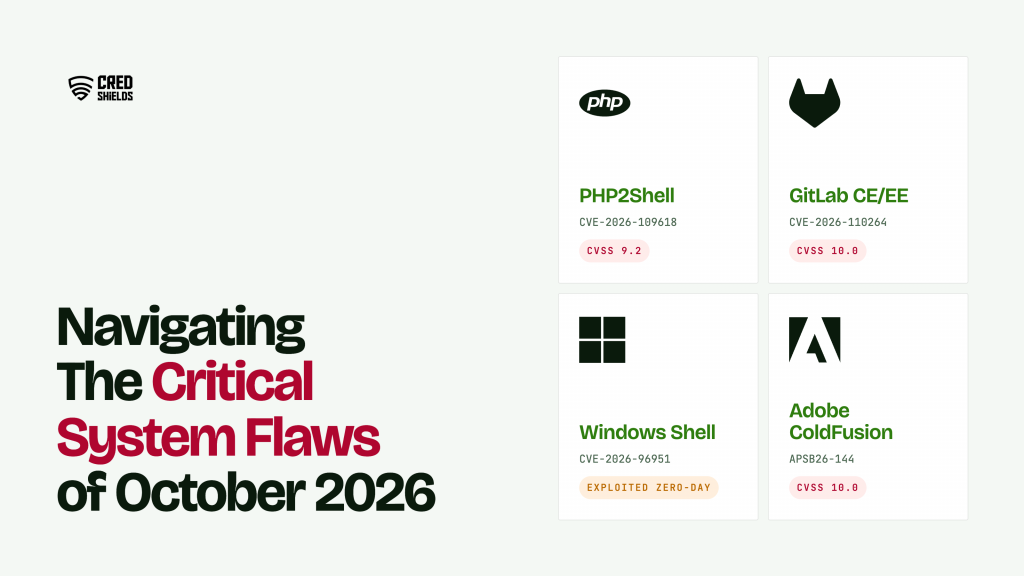
Researchers using advanced AI tools uncovered two major flaws hidden deep in PHP’s core engine. These bugs corrupt memory and mess up how the system checks its own state. The result? Attackers get a path to run their own code on the server, no login needed. It’s not just theoretical, either. Hackers are actively trying to exploit this right now, all over the world. The scary part is that standard web firewalls don’t catch it, since the attack happens so early, during the very first handling of a request.
The risk is serious enough that several European government sites and big company platforms actually had to pull their systems offline just to patch things up. If you’re running PHP with edge routing setups like PHP-FPM, Apache mod_php, php-cgi, or FrankenPHP, you need to make upgrades a top priority.
2. The GitLab 12-Year Repository Defect (CVE-2026-110264)
This vulnerability rated a perfect 10 on the CVSS scale hits almost every self-hosted version of GitLab Community Edition and Enterprise Edition from the past ten years.
Here’s the deal: it’s an integer overflow in the regular expression compiler that GitLab uses for rendering Org-mode files. So, someone with zero authentication can get full command execution as the native git user, just by slipping a specially crafted .org file into a public repo. That’s a big problem. It puts CI/CD pipelines, source code isolation, and stored secrets on the line, right now.
3. Node.js High-Severity Ecosystem Alerts
On top of server-side risks, the Node.js team dropped a surprise security update to fix four major runtime flaws. These bugs let attackers mess with environment resources, corrupt app process memory, or even cause random crashes. If you’re running real-time backend microservices, async API gateways, or serverless edge functions, don’t wait go audit your base images right now.
Enterprise Technical Impact Matrix
| Vulnerability Vector | Technical Impact | Threat Vector | Primary Exposure |
|---|---|---|---|
| PHP Core Engine | Total server takeover via unauthenticated memory manipulation | External HTTP/S Requests | PHP-FPM / Web Edge Nodes |
| GitLab CE/EE | Complete exfiltration of internal source repositories and CI/CD tokens | Public File Rendering (.org) | Self-Managed Git Servers |
| Node.js Runtime | Application denial-of-service and execution hijacking | API Payload Processing | Microservices / API Gateways |
Mandatory Action Plan for DevOps and Systems Engineers
If you want to prevent internal infrastructure from falling victim to a domino effect of compromises, you’ve got three things to handle right away:
- Enforce Upstream Upgrades for All Container Bases
Audit all running container tags and virtual machine environments. Force upgrade components to the verified secure upstream releases:
- For PHP, update right away to 8.5.12, 8.4.27, 8.3.36, or 8.2.35. Any PHP version 8.1 or older isn’t supported anymore, you need to migrate off those now, or use enterprise Linux LTS backports if you have no other option
- For GitLab, bump self-hosted instances to 19.5.1 or higher, or at least 19.4.3+, 19.3.6+
- Node.js should get all current LTS and security patches across every base image
- Turn On Server Level Exploit Protection
Sometimes it’s impossible to upgrade containers right away, especially with old apps tied to legacy dependencies. In those cases, tweak the main server php.ini settings. Cut off the main public exploit paths right at the source.
ini
session.upload_progress.enabled = Off
fatal_error_backtraces = Off
Engineering Note: You need to change these directives either globally on the server or directly in the PHP-FPM pool config. If you try to set them with ini_set() during runtime, it’s already too late in the process to properly protect the core.
- Set Up Network Isolation Guardrails
Right away, block public access to any backend service or internal code that isn’t patched. Move open staging environments, old apps, and development pipelines behind strong corporate firewalls, zero-trust networks, or VPNs. This cuts down on how much of your system is exposed to outside threats.
Technical Architecture Validation & Support
Working through tight patch windows on complex, layered systems isn’t easy. There’s no room for mistakes, especially when attackers are already out there scanning public facing sites. If your team needs a rapid architecture review, emergency runtime fixes, or a solid check to make sure patches actually work, Credshields can help. Our technical advisors are ready to jump in, review your defenses, inspect any exposed pipelines, and make sure your main systems stay strong against new threats.