

5 Business Logic Flaws Automated Scanners Never Catch (And How Attackers Exploit Them)
Automated scanners are great at finding known code mistakes. They check syntax, flag outdated packages, and catch missing headers. For basic code hygiene, they do their job well.
Yet modern breaches rarely start with a missing header. Attackers look for flaws in how your application actually works. They study your user roles, your checkout steps, and your approval rules. Then they bend those rules to steal data or get free access.
Automated scanners miss these bugs completely. A scanner reads code syntax, yet it has no idea what your business logics are supposed to be. It cannot tell if a free user should be able to view a paid dashboard or change another user’s password.
To catch these flaws, you have to test the app like a real attacker. Autonomous AI agents do this by logging into your app, walking through user flows, and trying to break your business logics.
Here are five business logic flaws that automated scanners miss, and how attackers exploit them in the wild.
Table of Contents
1. Broken object level authorization in modern APIs
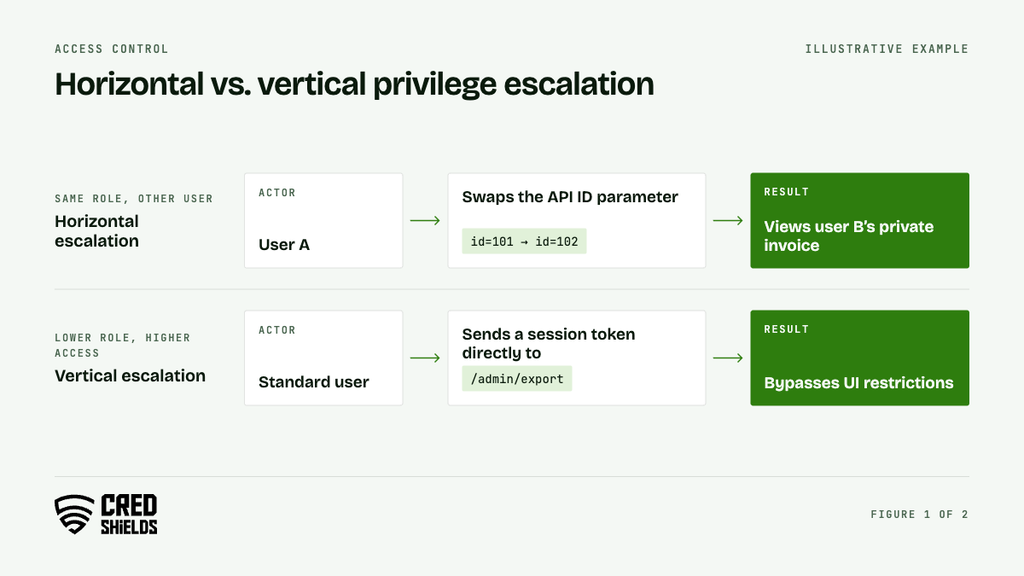
Imagine a banking app where you view your account statement at a simple API endpoint. The URL uses your account ID to fetch your balance. What happens if you change that ID number to match someone else’s account?
If the app checks that you are logged in, yet forgets to check if you actually own that specific account ID, anyone can read anyone else’s data. The OWASP API Security Top 10 ranks Broken Object Level Authorization as the single biggest threat to modern APIs.
A static scanner looks at that API endpoint and sees valid, clean code. It does not understand ownership rules. Autonomous agents catch this flaw by logging in with two different test accounts and trying to swap IDs across endpoints. If Account A can read or change data belonging to Account B, the agent flags the breach and proves the exact path.
2. Skipping steps in multi stage workflows
Many web apps rely on multi step flows for signups, password resets, or online checkouts. Step one collects user details. Step two checks payment or sends a verification code. Step three unlocks the account.
Attackers do not follow your user interface buttons. They send requests directly to your backend APIs. If your backend assumes a user already completed step two simply because they reached step three, an attacker can jump straight to the final step and bypass payment or verification entirely.
Pattern scanners check each endpoint in isolation. They never test what happens when someone calls step three before step two. Autonomous agents map out the entire workflow, test steps out of order, and prove whether an attacker can skip critical security gates.
3. Privilege escalation through hidden role parameters
Most business apps separate regular users from admins. A regular user can edit their own profile. An admin can manage billing, view all users, and change system settings.
Sometimes, the code that updates a user profile accepts extra fields in the background. When a user saves their new name, the app sends a profile update request to the server. An attacker can intercept that request and add a hidden parameter, such as setting an admin flag to true. If the backend blindly saves every field sent in the request, that regular user becomes an admin in seconds.
Research from Veracode in its GenAI Code Security studies shows that nearly 30% of AI written code snippets carry known security flaws, including weak input handling like mass assignment. Scanners rarely know which database fields should be locked down. Autonomous agents inspect API payloads, inject role parameters during normal profile updates, and verify whether a low level user can gain admin rights.
4. Abusing limits, coupons, and race conditions
Business logics often depend on timing and quantity. Think about a discount code that should only be used once per customer, or a wallet transfer that checks your balance before sending money.
If two requests hit your server at the exact same millisecond, a poorly written app might check the rule twice before updating the database. Attackers use rapid parallel requests to apply the same promo code ten times or withdraw more money than they actually hold in their account.
A static scanner reads the code line by line and sees a valid balance check. It cannot simulate simultaneous traffic hitting your live business logic. Autonomous agents send timed, concurrent requests against sensitive actions like redemptions and transfers to prove whether your app breaks under race conditions.
5. Chaining minor leaks into full account takeovers
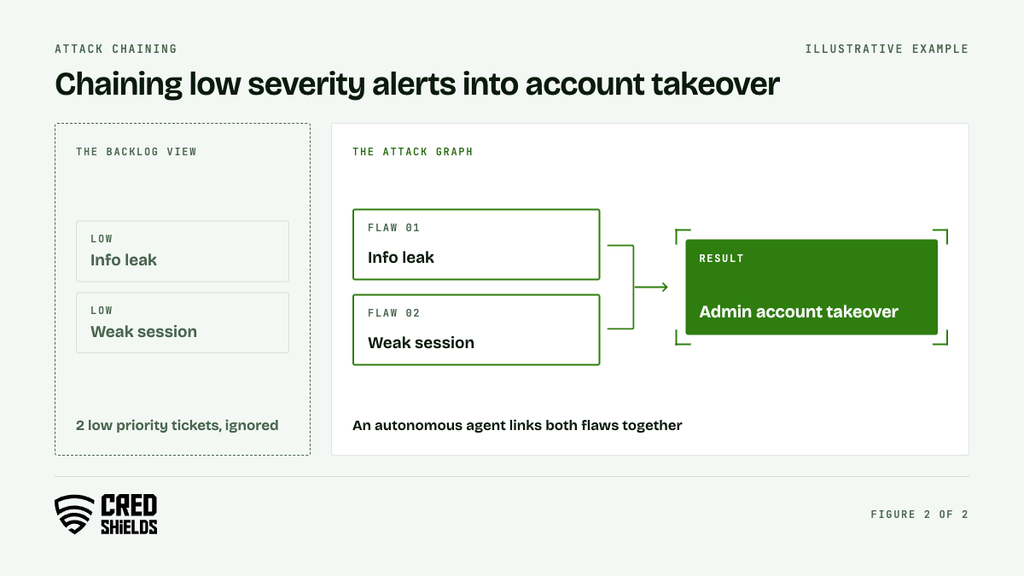
Some logic flaws look harmless on their own. One endpoint might leak internal user IDs. Another endpoint might allow unlimited password reset attempts without locking the account.
Traditional scanners evaluate each alert in isolation. Both issues get labeled as low severity and sit in your backlog for months. Veracode reports in its State of Software Security Report that the average time to fix flaws in old workflows stretches to 298 days. Meanwhile, the Verizon Data Breach Investigations Report shows that real attackers regularly combine small weaknesses to achieve major breaches.
Autonomous agents think in chains. When an agent spots a minor leak on one screen and a weak rule on another, it tests whether those two pieces connect. It proves how an attacker can combine low risk flaws to take over an admin account.
Moving beyond syntax checks
You cannot protect modern business logic with tools that only read code syntax. When your team ships updates every week, relying on annual manual audits leaves your app exposed for months at a time. Bringing autonomous offensive testing inside your workflow gives your team the ability to test real user flows, catch logic flaws before attackers do, and ship with confidence.